UI/UX
User Research
Wireframing
Prototyping
Teamwork
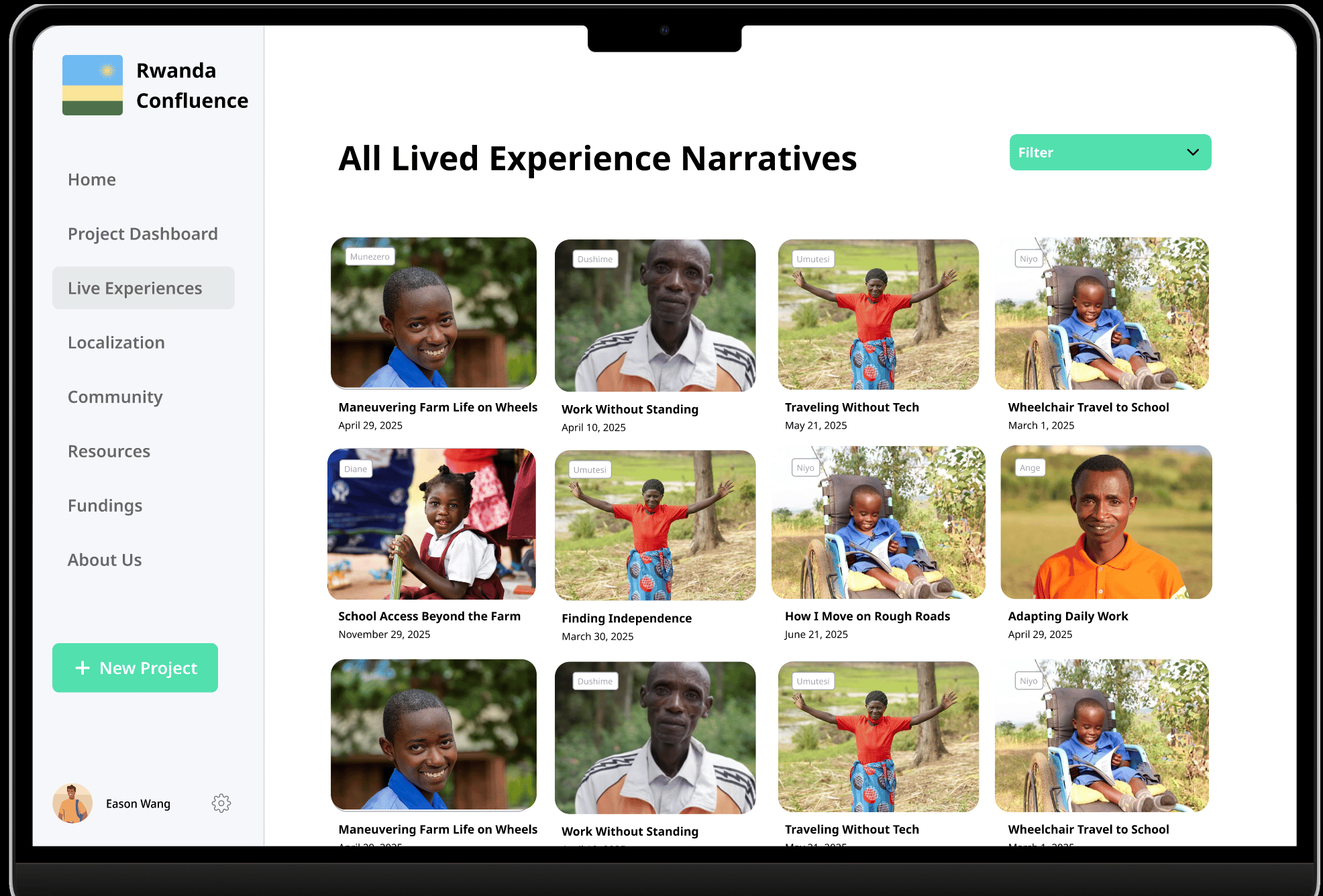
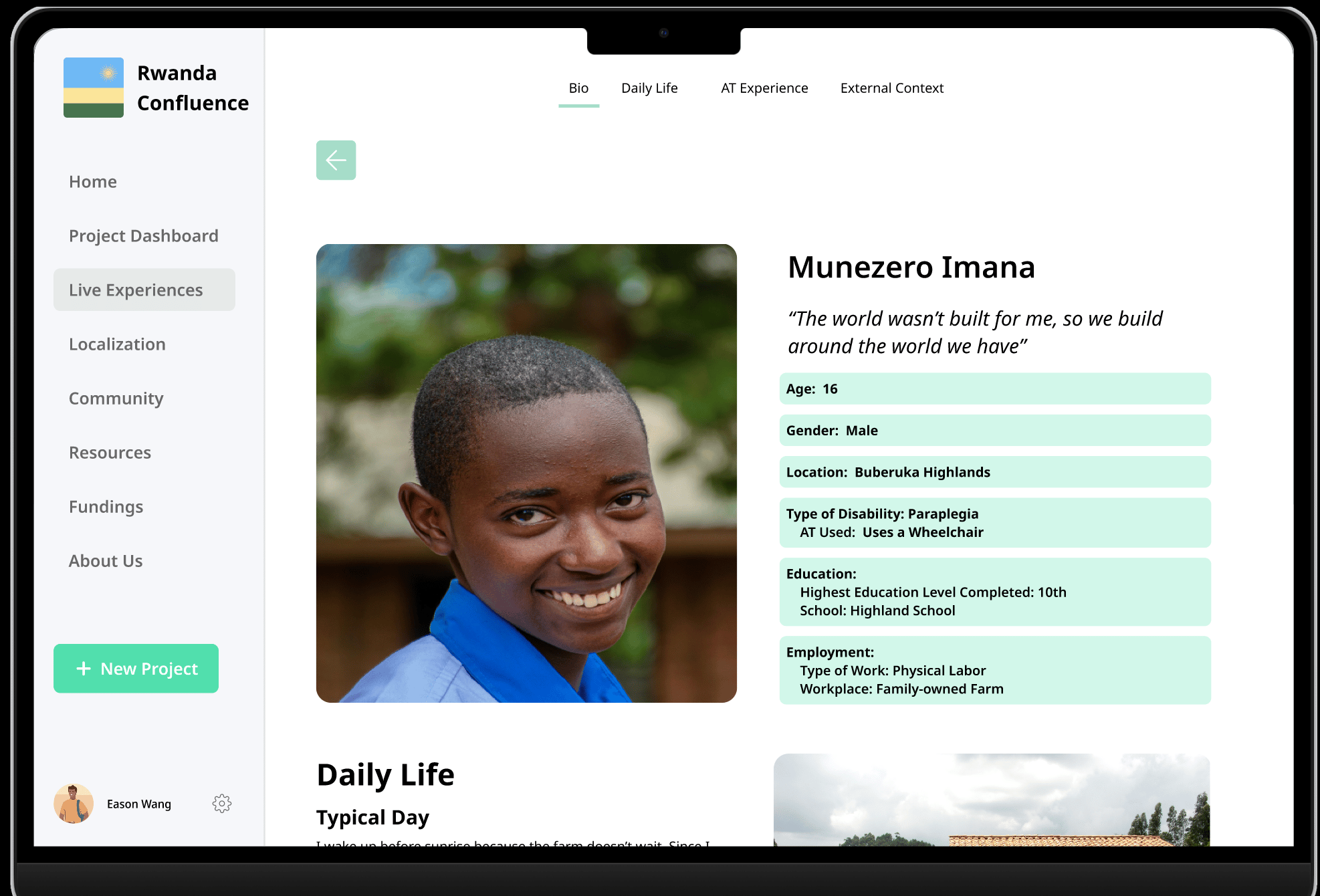
Lived Experiences within Confluence
a feature designed for sharing and amplifying lived experiences with disability and assistive technology
Specs
- 15-week period
- UX designer + researcher under a team with 2 other UX designers + researchers as well as a UX team lead
- Figma and Figjam
Problem Space

Over 60 Million People with a Disability in Sub-Saharan Africa
Less than 25% have access to Assistive Technology
Confluence is poised to transform assistive technology development and access across Sub-Saharan Africa by integrating geospatial data, lived experience, and local innovation into a single, collaborative platform. By centering the voices of people with disabilities and enabling partnerships across sectors and regions, Confluence will drive the co-creation of AT solutions that are sustainable, inclusive, and locally grounded.
The project my team worked on explores the lived experiences of people with disabilities in Rwanda, highlighting the social, physical, and systemic challenges they face in daily life—from limited access to education and employment to navigating inaccessible public spaces. Through storytelling and community collaboration, the project aims to amplify their voices, showcase their resilience, and advocate for more inclusive policies and design practices in both urban and rural contexts.
How can we streamline lived experience profile creation while making the profiles easily accessible to AT designers and researchers?
Project Goals
- Understand Primary Users and What Their Needs Are
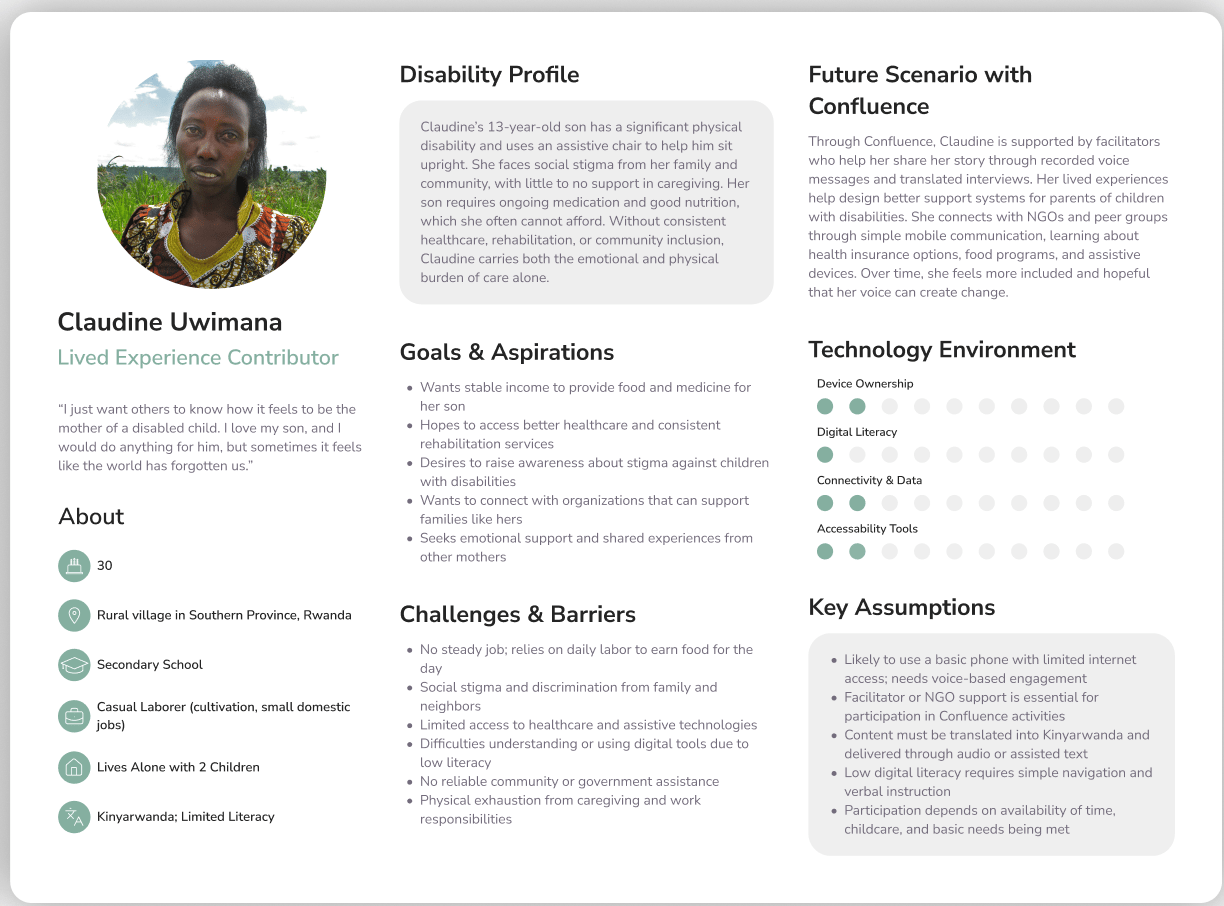
Create detailed user personas for each type of user that will make use of this Confluence feature
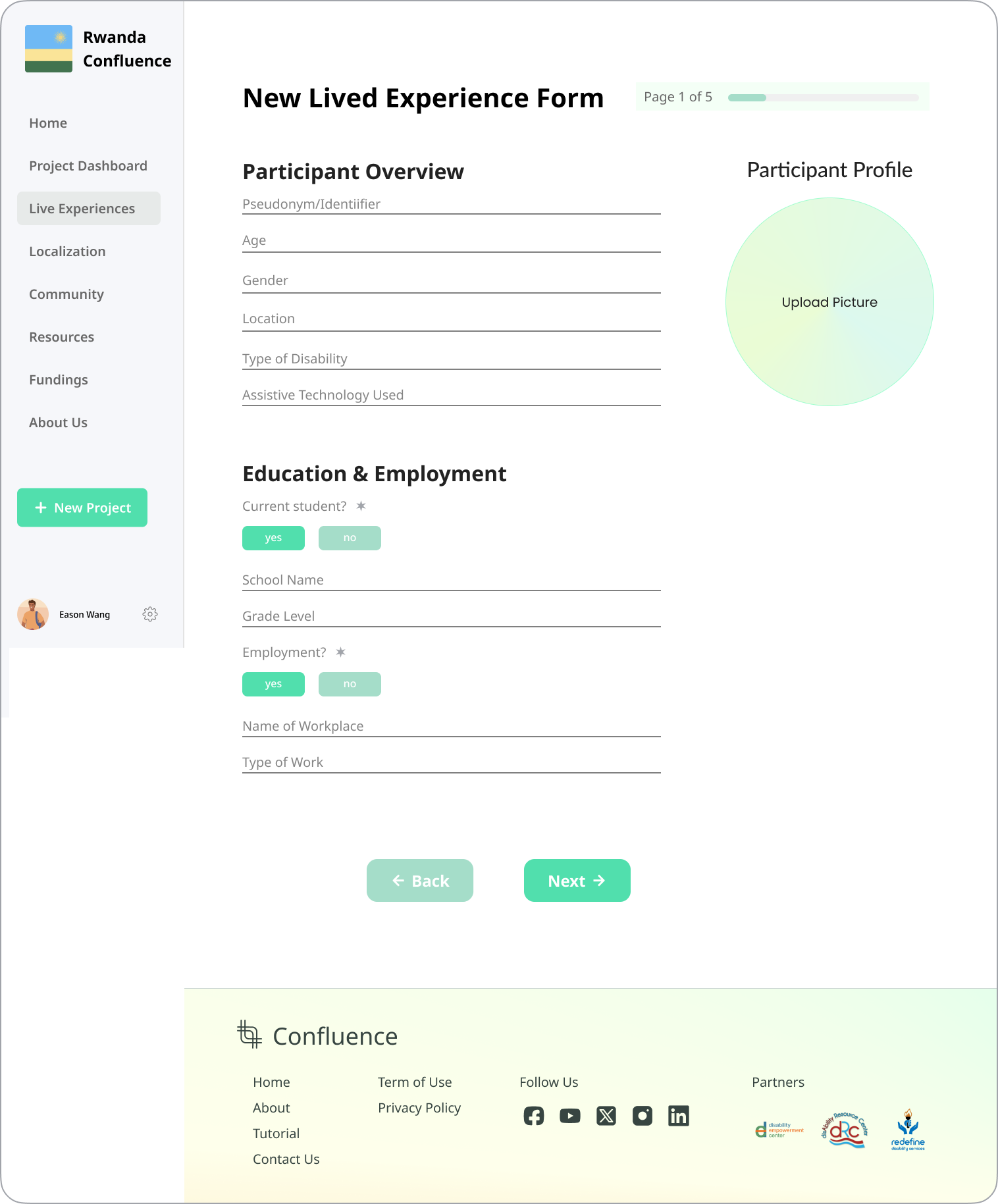
- Design an Input Form for Creating a Lived Experience Profile
Design an input form that makes creating a lived experience profile quick and easy with the necessary information
- Make Searching for and Reading Through Profiles Easy for Researchers and AT Designers
Create a dashboard page as well as a profile page to display the information from the input form
Research
Primary users
Lived Experience Contributors - caretakers of disabled children or NGOs who work with families of disabled children
AT designers looking to learn about lived experiences
Created using research from real field interviews done in Rwanda in Spring of 2024!
Structured Lived Experience Input
-->
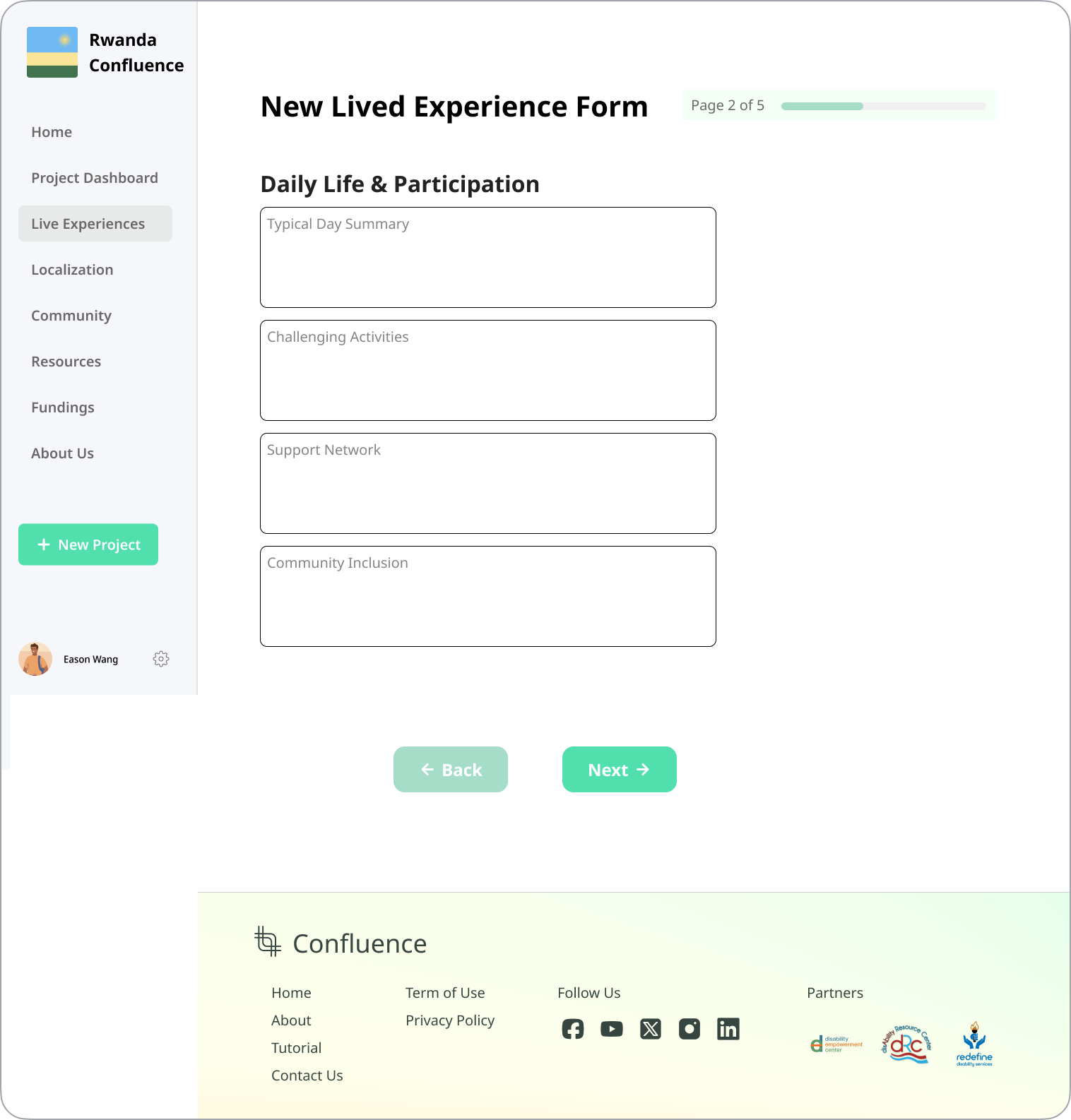
Progressive, Low-Friction Flow
A guided, multi-step form helps lived experience contributors document daily life, assistive technology use, and environmental and economic context.
Progress Bar
Breaking the form into manageable steps reduces cognitive load while supporting longer, more thoughtful responses.
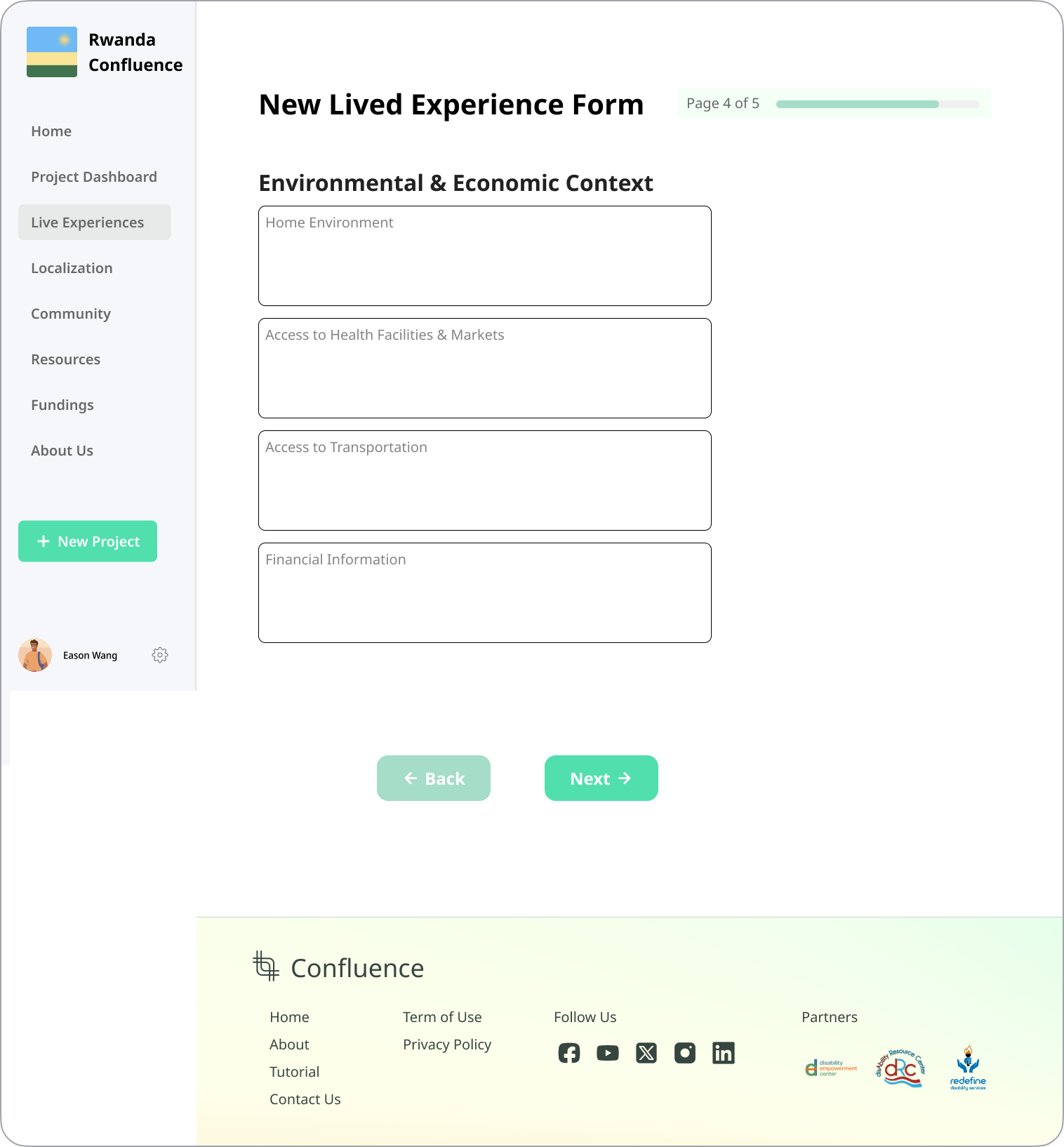
Context Rich Data Capture
The form captures daily life, assistive technology use, and environmental context to preserve nuance beyond basic demographics.
Organized and Discoverable Profiles
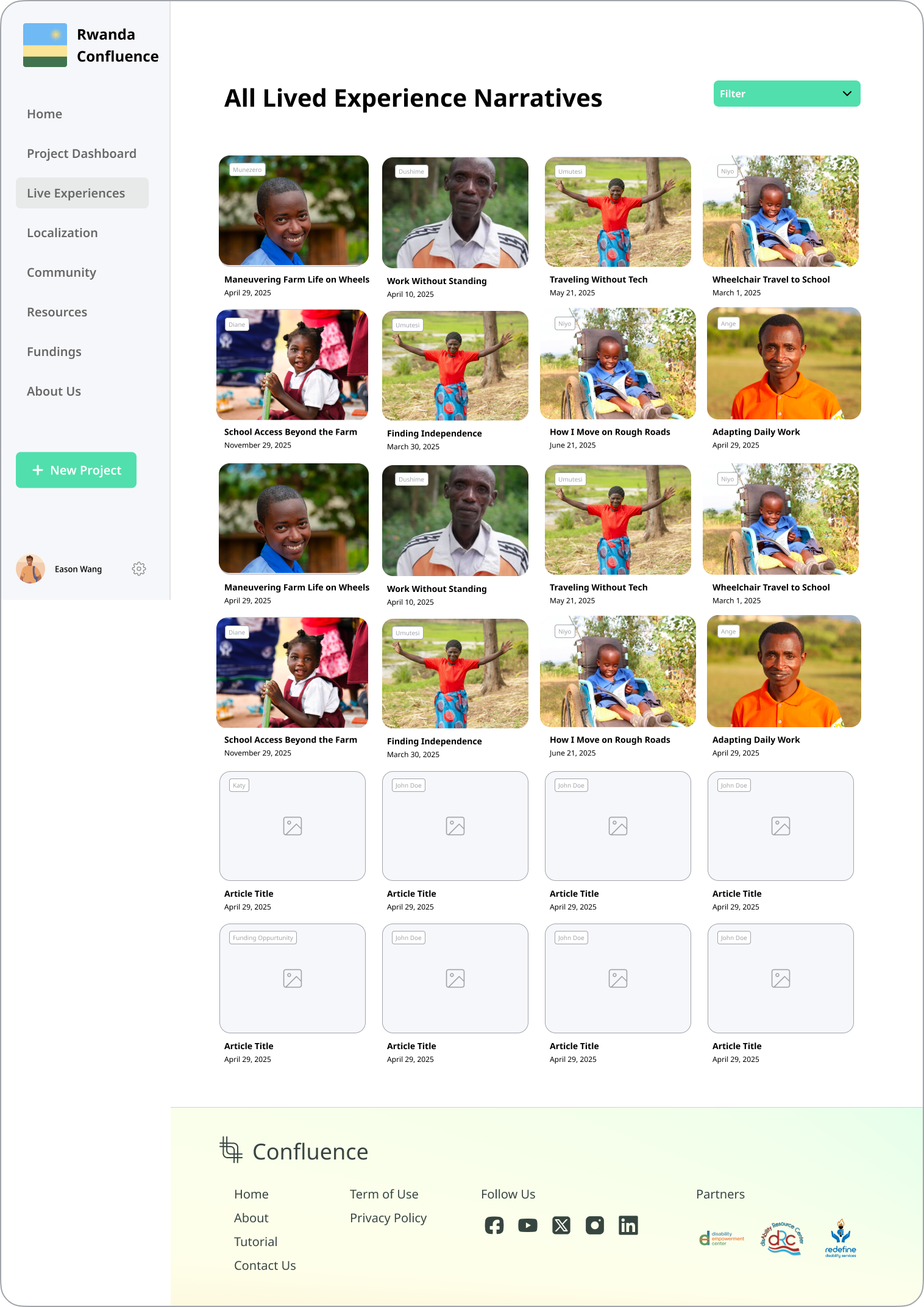
Centralized Dashboard
A dashboard allows nonprofits to view, manage, and access lived experience profiles in one place.
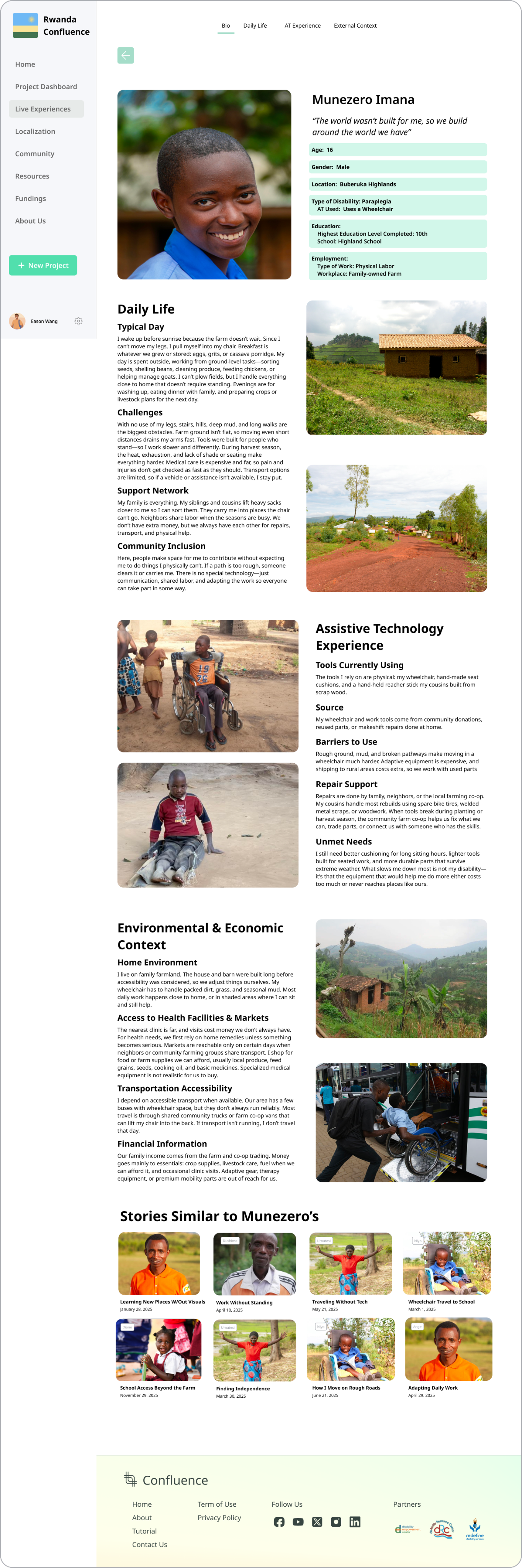
Consistent Profile Template
A standardized profile layout ensure lived experiences are presented clearly and consistently across the platform.
Final Feature Demo
Key Takeaways
Working on a project that I know will have a real impact on real people is so meaningful and rewarding. This project reminded me exactly why I chose to pursue UX.

Standardization and storytelling can coexist!
I initially worried that structuring lived experiences would make them feel impersonal. Through this project, I learned that with the right prompts and flexibility, structure can actually support storytelling while still making the profiles easy to understand, compare, and build on over time.
Not everyone on a team will have the same skillset and that’s okay!
Some of my team members had limited experience with UX design. I taught them about components, auto-layout, and styles, so that we could be efficient as a team and keep our designs uniform. This was also especially important as our work is part of a long-term research project that different students will work on throughout future semesters.
Let’s create something meaningful
together!
Currently looking for summer 2026
internship!
Designed by Riya Jasmine Ganguly
using Adobe Photoshop and Figma
All rights reserved,
Riya Jasmine Ganguly

2026


